
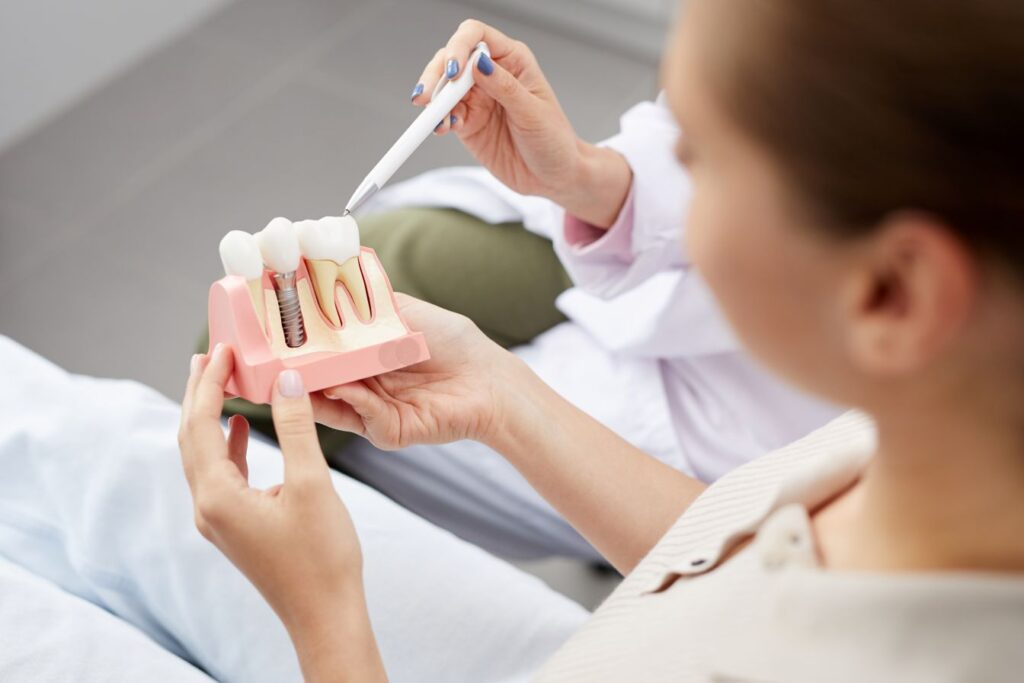
If you’ve replaced your missing teeth with durable, lifelike dental implants, you likely are already enjoying the incredible benefits of having a second chance at a beautiful smile. Dental implants can restore your ability to eat a full diet, speak clearly, and even show off your gorgeous grin with confidence. But while these restorations do boast an impressive 98 percent success rate, they still carry a small risk of failure. Thus, to protect your newly improved smile from falling into that two percent, here are a few ways to help you avoid the unthinkable, so your second chance lasts a lifetime!
What Causes Dental Implant Failure?
Although most dental implants go on to last for a lifetime, they still do have a small chance of failing. This can be caused by many different things, but most frequently it is due to a condition called peri-implantitis, which is an infection caused by gum disease and poor oral hygiene. This illness essentially loosens the ligaments holding the dental implant in place and can occur any time after your implant is placed, even years or decades later.
Another common cause of dental implant failure is failed osseointegration, which can occur during the healing process after surgery as the prosthetic is unable to properly fuse with the bone. Other reasons include injury to the implant site and even certain medical conditions or treatments.
What are the Signs of Dental Implant Failure?
Dental implant failure often comes with a few warning signs that you should be on the lookout for when caring for your smile. These include:
- A loose or wobbly implant
- Worsening pain in the mouth weeks or months after surgery.
- A gum infection or inflammation of the periodontal tissue, including tender, swollen, or bleeding gums.
- Pus or discharge leaking from the gums.
- Receding gums around your dental implant.
- Painful chewing when using the dental implant.
- Nerve damage or numbness surrounding the implant, or your lips, tongue, or gums.
- A persistent bad taste or foul odor in the mouth.
If you notice any of these symptoms, contact your dentist as soon as possible, as the longer you wait, the more complicated and costly it could become to treat.
How Can I Avoid Dental Implant Failure?
The best way to avoid dental implant failure is to follow your dentist’s aftercare instructions diligently after your surgery, and maintain excellent oral hygiene, including brushing your teeth twice a day, and flossing and using an antibacterial mouthwash daily. Furthermore, be sure to quit any dangerous oral behaviors like smoking and using your teeth as tools. If you have bruxism (teeth grinding) speak to your dentist about getting a custom mouthguard made to protect your natural teeth and dental implants.
Remember, while dental implant failure is rare, it is not impossible. Thus, to ensure that your newly restored smile lasts for a lifetime, be sure to follow your dentist’s aftercare instructions, avoid any bad oral habits, and maintain excellent oral hygiene. If you notice any signs of failure, contact your dentist as soon as possible, as the faster you get help, the better the odds of saving your smile!
About Dr. Radz
Dr. Gary Radz is a well-respected cosmetic dentist here in Colorado and around the world. In fact, he has even earned the distinction of being featured as one of “Denver’s Best Dentists” by 5280 Magazine 15 years in a row! Dr. Radz has been featured in numerous publications, including the New York Times, Chicago Tribune, Denver Post, Rocky Mountain News, Boulder Camera, Charlotte Observer, Wild Blue Yonder, and Parenting magazine, and is even a contributing editor to Denver’s BLOOM and SHINE magazines. To schedule a consultation at Smile Castle Rock for dental implants, visit our website or call us today at 303-663-9600.